

Sermons
The Passionate Spirit-ual Practice of Care for the Body
Acts 3:1-10The Passionate Spirit-ual Practice of Care for the Body Now Peter and John were going up to the temple at the hour of prayer, the ninth hour. 2 And a man lame from birth was being carried, whom they laid daily at the gate of the temple that is called the Beautiful Gate to ask alms of those entering the temple. 3 Seeing Peter and John about to go into the temple, he asked to receive alms. 4 And Peter directed his gaze at him, as did John, and said, "Look at us." 5 And he fixed his attention on them, expecting to receive something from them. 6 But Peter said, "I have no silver and gold, but what I do have I give to you. In the name of Jesus Christ of Nazareth, rise up and walk!" 7 And he took him by the right hand and raised him up, and immediately his feet and ankles were made strong. 8 And leaping up he stood and began to walk, and entered the temple with them, walking and leaping and praising God. 9 And all the people saw him walking and praising God, 10 and recognized him as the one who sat at the Beautiful Gate of the temple, asking for alms. And they were filled with wonder and amazement at what had happened to him.
The Passionate Spirit-ual Practices of Prayer
What are your present habits of prayer?
Read 1 Corinthians 12:12-31.
John Donne an English poet from the same period as Shakespeare wrote,“No man is an island, entire of itself;Every man is a piece of a continent, a part of the main.”
How does this reflect the Bible’s teaching about the Church being the Body of Christ?
How does this influence your perspective on praying alone? Praying with others? Praying with not-yet-Christians made in the image of God?
Tim mentioned several forms of prayer: the daily office, prayer-walking, and intercessory. Have you ever practiced other forms? What were they? Did you find them helpful? Would you commend them to others? Would you be willing to help another to learn how to pray in that way?
Crossroads always includes prayers for other nations in the bulletin. Why do you think this is an important topic for the church to be praying about?
Pentecost - Joel 2:18-32
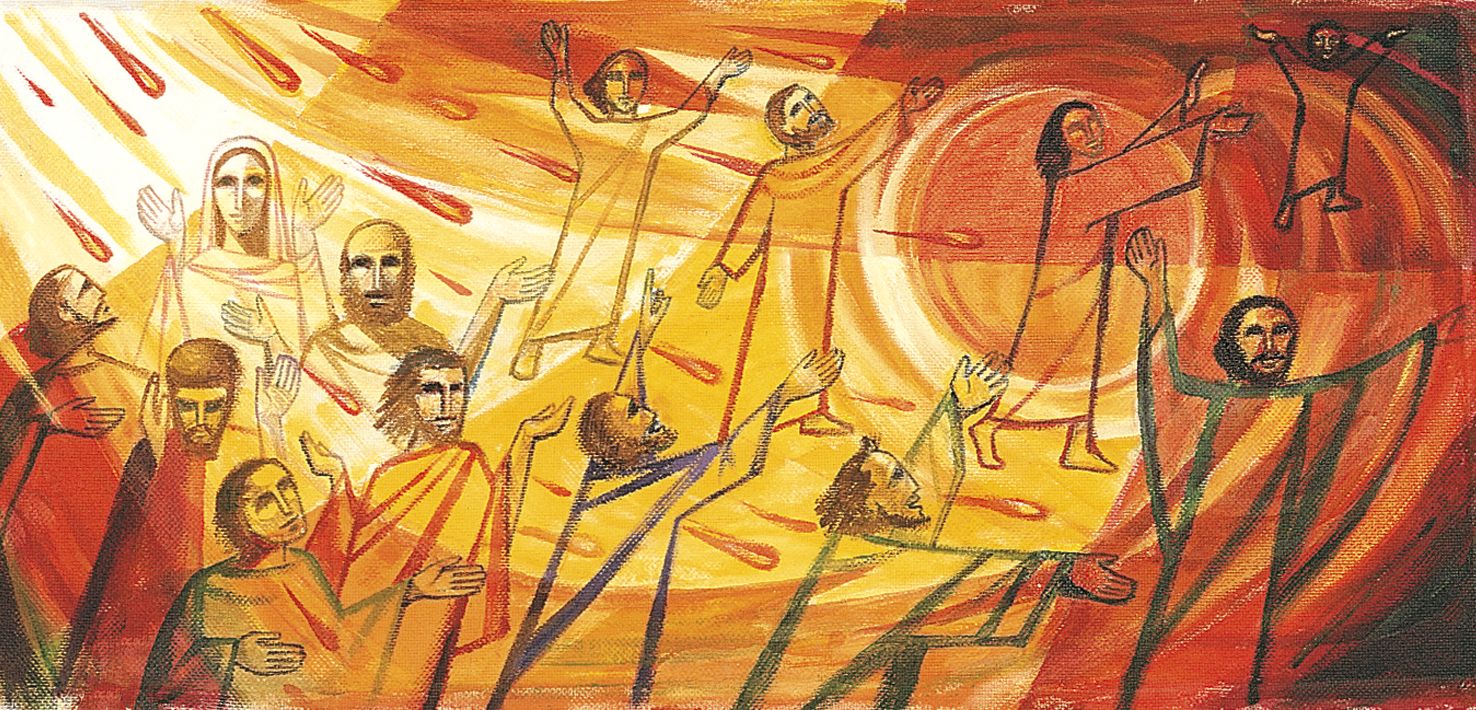 What point did you find helpful and encouraging from the sermon? Did it bring you hope?
Tim pointed out that Joel 2:17-32 was fulfilled in one person first – Jesus Christ. The ultimate day of the LORD’s wrath is still to come upon all his enemies outside of (i.e., not trusting in) Christ. The ultimate day of God’s saving work is still to come upon all his people in Christ.
Regarding the Apostle Paul’s letters Dr. Tom Wright notes, “[Paul’s] theology has the character of inaugurated eschatology, that is, of a sense that God’s ultimate future has come forwards into the middle of history, so that the church is living within – indeed, is constituted precisely by living simultaneously within! – God’s new world and the present one.” He goes on to write, “Restorative justice, this covenant faithfulness through which creation itself will be redeemed, has been unveiled already, in advance, in the apocalyptic events of Jesus’ messianic death and resurrection.” (Paul, 57)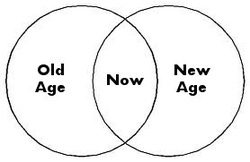
If you were to use a different set of words to communicate “inaugurated eschatology” what would they be? Imagine you wanted to explain this to your non-Christian neighbor or a 3rd grader in Christian Education.
Read Paul’s letter to the Colossians 2:9-15.
How does “realized eschatology” help you to understand Paul’s meaning?
Read 1 Thessalonians 5:1-10.
How should “realized eschatology” impact our life?Socially?Emotionally?Psychologically?Missionally (activity done for the sake of God’s mission to bring blessing to all the families of the earth)?
What if "realized eschatology" were not true. How would that change the nature of Christianity?

The Hospitality of Gathered Worship
 Who is someone that comes to mind when considering the theme of “hospitality”? Is there someone who comes to mind who is the opposite of “welcoming”? Tell a story to explain.In Romans 14:3 and 15:7 Paul writes that God the Father and the Son have welcomed the people of God. How has Jesus Christ welcomed us; what does God the Father require of us to be a part of his Kingdom? (If you are stuck then read Romans 3:19-28)Do you sense that you are warmly welcomed into God’s family? Do you have a sense of your citizenship being secure through the welcome our hospitable God has provided?
Since God has sacrificed in order to make our gatherings possible, how can we likewise welcome one another (Romans 15:7)? In other words, what sorts of sacrifices might we need to mak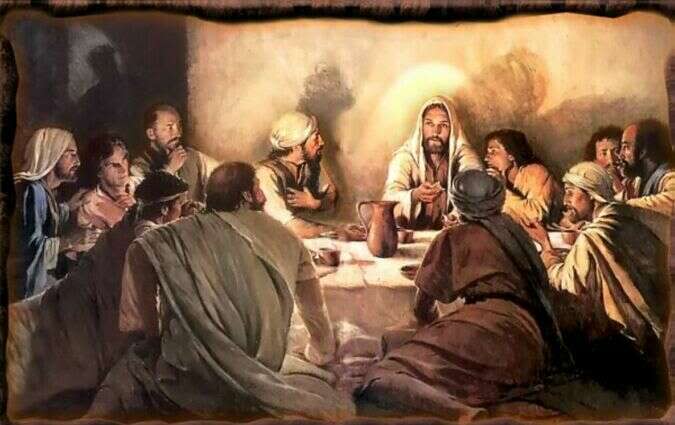 e in order to make all kinds of Christians feel welcomed at gathered worship on Sunday?
Luke 22:14-22 relates Jesus’ institution of the Lord’s Supper. Why is our regular practice of Communion one way of helping us to learn that gathered worship is hospitable?
Gathered Worship Has a Flow (No Audio Recording)
 The Flow of Gathered Worship at CrossroadsWhat stood out to you from the sermon Sunday?
Have you worshiped at churches that had a flow somewhat like the revivalist movement? (Prayer --> Song --> Song --> Prayer --> Sermon --> Altar Call --> Prayer --> Song). What did you like about it? What are the positives? Why did Tim say that worship in this tradition can feel like going round and round in a turn-style? To see the video he referred to visit https://www.youtube.com/watch?v=4o0dUAhSFB4.
The beginning of worship at Crossroads highlights the majesty of God and his act of creating and sustaining all things. (Those mighty deeds of God are traditionally referred to as Creation and Providence). If you invited your not-yet-Christian friend to Crossroads worship service how would you explain why we focus on God as Creator and the world as his creation?
The next movement in the worship service is about God’s people confessing their sins and receiving God’s grace afresh. This highlights that God is not only a Creator but a Restorer of his creatures. Why is it important that we continue to confess our sins as the Church? What kind of a relationship with God does this help to develop? How could our confession of sins be a good thing for non-Christians to see us do?
The next part in the flow of Crossroads gathered worship is “God Instructs Us”. Read Acts 2:41-42. After Peter’s evangelistic sermon and baptism of 3000 people the people began to meet together for worship. Which activity of theirs corresponds to “God Instructs Us”? Why put this part of the worship service here? How does it’s placement highlight the logic of the gospel (grace --> law and not law --> grace)?
Next in the service is “God Communes with Us” which we celebrate on the second and fourth Sundays of the month at Crossroads. Read 1 Corinthians 10:16-17. Paul is describing what’s known as Communion or the Lord’s Supper. Why is it appropriate that we celebrate this together at our regular gatherings on Sunda y? Why would it be inappropriate to celebrate it by ourselves as individuals?
The last movement in Crossroads worship service is “God Commissions Us” to be participants in his restorative mission. God addresses us as our Covenant King and Lord through the Great Commission (Matthew 28:18-20) and Benediction and we address him (and one another) in song. Do you think that God’s commissioning of us is a part of the gospel, the good news? How is this good news along with all of the rest of the worship service? How does it help us to understand God and ourselves better?
Gathered Worship is Covenantal - Joshua 24:1-28
How aware and knowledgeable are we that we have a covenant with God?Do you think that worshippers at Crossroads sense a need to respond to God during worship?What do you think it means to renew our covenant with God during a worship service today?Read 2 Corinthians 4:5-6Where do you see the theme of a suzerain-vassal covenant in these verses?How is this covenant we have connected with looking into the face of another?Read Revelation 22:1-5How is worship in the fully restored heavens and earth presented with regards to God’s face?When you look back over the course of your life do you sense that worship is a very interpersonal event on Sundays?
How would you like to see your worship on Sunday improve interpersonally?
Seeing that God has made each individual different how does that inform the personal nature of congregational worship?
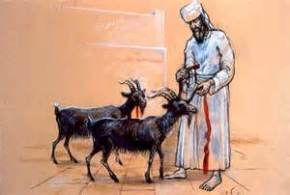
Leviticus 16 'The Day of Atonement'
 If a neighbor or co-worker were to ask you what the Pastor spoke about on Sunday how would you summarize the sermon in one sentence?
You can’t understand sacrifice of Jesus until you understand sacrifice in Leviticus. Leviticus 16 is about the Day of Atonement? How was the Day of Atonement like spring cleaning?
An atoning sacrifice is also known as a ransom in Leviticus. Let’s consider how a ransom works.Jay Sklar writes, “In the Old Testament, a ‘ransom’ has the following characteristics:1. It is a legally or ethically legitimate payment;2. It delivers a guilty party from a just punishment that is the right of the offended party to execute or to have executed;3. It is a lesser punishment than was originally expected;4. It is up to the offended party whether or not to accept the payment; and5. Its acceptance serves both to rescue the life of the guilty and to appease the offended party, thus restoring peace to the relationship.
Exodus 21:28-30 is an example of how a ransom works in human-to-human relationships. Read Exodus 21:28-30How can a man whose ox has gored others multiple times avoid the death penalty?Is the offended party required to place a ransom upon the offender?How would you view the offended party’s action?Read Leviticus 17:11Just as God mercifully provided for a ransom in human-to-human relationships Lev. 17:11 is about how ransom, or atonement, also works in God-to-human relationships. Sacrifice in Leviticus is a ransom for those who deserve death.Read Mark 10:45How does Jesus’s death on the cross meet the requirements of ransom above?How is Jesus’ ransom payment even better than that required in the Old Testament?How much of the debt has not been paid by Jesus? How does this help us to understand why the New Testament speaks of Jesus’ saving work as a gift (see Romans 6:23 and Ephesians 2:8)?
Law as a Window into the Heart of God
Leviticus 19Law as a Window into the Heart of God Leviticus 19:1 And the LORD spoke to Moses, saying, 2 "Speak to all the congregation of the people of Israel and say to them, You shall be holy, for I the LORD your God am holy. 3 Every one of you shall revere his mother and his father….9 "When you reap the harvest of your land, you shall not reap your field right up to its edge, neither shall you gather the gleanings after your harvest. 10 And you shall not strip your vineyard bare, neither shall you gather the fallen grapes of your vineyard. You shall leave them for the poor and for the sojourner: I am the LORD your God…. 17 "You shall not hate your brother in your heart, but you shall reason frankly with your neighbor, lest you incur sin because of him. 18 You shall not take vengeance or bear a grudge against the sons of your own people, but you shall love your neighbor as yourself: I am the LORD. 19 "You shall keep my statutes. You shall not let your cattle breed with a different kind. You shall not sow your field with two kinds of seed, nor shall you wear a garment of cloth made of two kinds of material.
Guess Who's Moving In? - Introduction to Leviticus
If you could have had just one point from Sunday’s message communicated what would it have been?The people we dwell with shape our sense of who we are (identity). Which people in your life have most shaped your identity?[caption id="attachment_4635" align="alignleft" width="700"]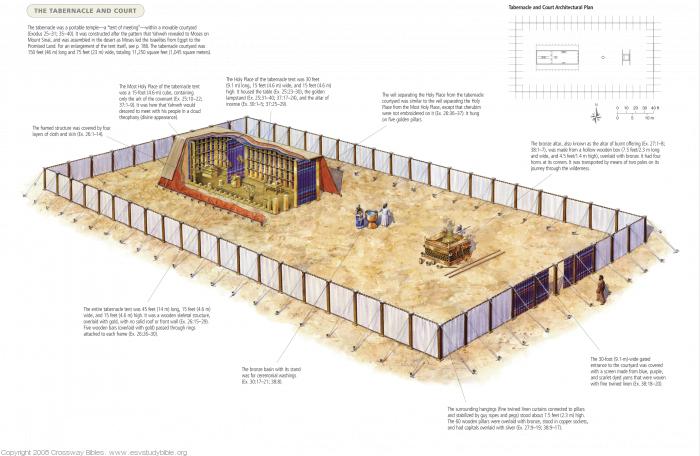 The Tabernacle and Court[/caption]In Leviticus the Covenant King comes to dwell among his people.What evidence from Exodus points to God being a COVENANT King?What evidence from Exodus points to God being a Covenant KING?What evidence from Exodus points to God being a Covenant King who DWELLS AMONG HIS PEOPLE?How has God come to dwell even nearer to his covenant people today?How would you say that God’s dwelling within and among us shapes your identity, your sense of who you are?J. Todd Billings writes that among many Americans, especially emerging adults “faith has been reduced to a necklace one wears as part of a self-made identity rather than a whole new set of clothes one wears—“put[ting] on the Lord Jesus Christ” (Rom. 13:14)—as a new identity found in him.” Billings, J. Todd (2011-11-01). Union with Christ: Reframing Theology and Ministry for the Church (Kindle Locations 404-415). Baker Publishing Group.Do you find yourself trying to keep Jesus the Covenant King at arms-length despite his desire to dwell near? Do you sense any fear at being so completely identified with him?What inspires you about being so identified with the Father who has adopted you in Christ (Romans 8:15)? What do you like about others who are excited about the nearness of their Covenant King?
H.O.A.'s in Conflict - Haggai 2:1-9
[caption id="attachment_4570" align="alignleft" width="300"]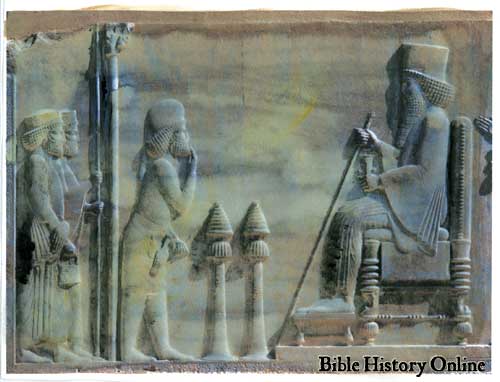 Darius, King of Persia at the time of Haggai's ministry[/caption]What stood out to you from Sundays sermon on Haggai?Have any of you ever had good or bad experiences with a Home Owners Association (HOA)?On Wikipedia it is noted that, “In the United States, a homeowner association (or homeowners association) (HOA) is a corporation formed by a real estate developer for the purpose of marketing, managing, and selling of homes and lots in a residential subdivision.” So, an HOA is about real estate development.The LORD’s HOA dictates that he will always have a home within his real estate and among the other home owners. Positively he will enjoy being with his neighbors and bring blessing to the entirety of the real estate through them. Negatively, he will not be kicked out of his own neighborhood.[caption id="attachment_4569" align="alignright" width="457"]
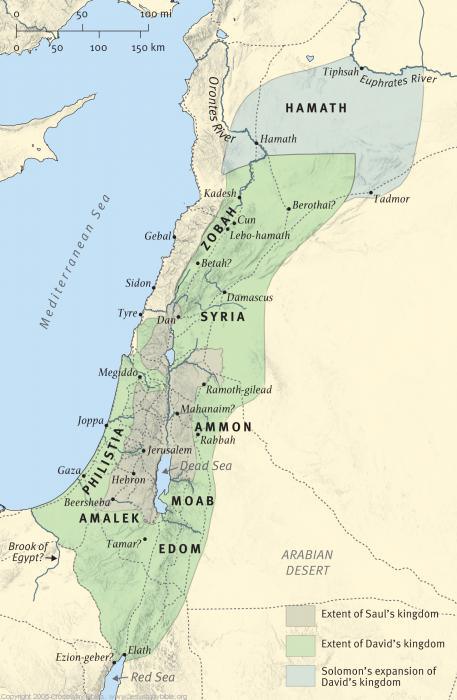 Israel Under Saul, David and Solomon[/caption]How does the LORD’s possession of a house among humanity influence the development of his real estate (creation) in the Garden of Eden? What about among Israel during the reigns of Saul, David and Solomon?What was the building of the temple communicating in the days of the post-exilic prophet Haggai (520 BC)?Read Ephesians 2:11-22In 2:20 it says that Christ is the cornerstone of the temple being built by God today. John Stott writes that, “the cornerstone is of crucial importance to a building. It is itself part of and essential to the foundation; it helps to hold the building steady, and it also sets it and keeps it in line…As a building depends for both its cohesion and its development on being tied securely to its cornerstone, so Christ the cornerstone is indispensable to the church’s unity and growth. Unless it is constantly and securely related to Christ, the church’s unity will disintegrate and its growth either stop or run wild.”The world we live in has several conflicting HOA’s with God’s HOA. Tim mentioned several ways our local HOA is in conflict with God’s HOA:- We may have houses for gods but they must remain general so therefore the cornerstone must be something other than Jesus Christ OR we need to have several cornerstones that include all gurus, religious leaders, etc.- The houses of gods will not be at the center of the neighborhood because they will not serve as the main resource for real estate development.- Greater attention will be given to the construction of commercial buildings that to religious buildings because they bring in more money which is ultimately the source for greater real estate development.- The houses for gods will not have any say regarding the development of the government, education, economic endeavors or any other aspect in the neighborhood.- Attendance at the house of gods is completely voluntary and non-attendance will not warrant fines from the HOA (in contrast to non-attendance to school).Can you think of other differences between the world’s HOA and God’s HOA regarding the building, location and importance of God’s international temple in Christ?What most bothers you about the world’s HOA?How are you, in Christ and by the Spirit, disregarding the world’s HOA?What would happen if you used the Word of God as a resource for planning, executing or evaluating at work? Would you receive “a fine” from the HOA? How could your flouting the HOA at work actually help to develop God’s real estate despite the fine you receive?
Surviving Heart Disease - Zechariah 12:10-13:1
Is there anything from last Sunday’s sermon from Zechariah (c. 520 BC) that you found particularly applicable to your  life?What are examples in music, TV, movies or elsewhere of American interest in survival?Check out this video from Gloria Gaynor and/or Kelly Clarkson.https://www.youtube.com/watch?v=ZBR2G-iI3-Ihttps://www.youtube.com/watch?v=Xn676-fLq7IWhat is survival about for these women?Here is another video of people in America preparing for survival.https://www.youtube.com/watch?v=W7JnClHTCUQWhat do these people want to survive from?What had the prophet Zechariah’s audience survived from? (Hint: Zechariah prophesied in c. 520 BC during the Persian Period)[caption id="attachment_4564" align="alignright" width="218"]
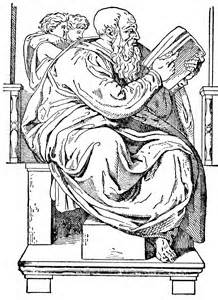 Zechariah by Michelangelo[/caption]Read Zechariah 12:10What does Zechariah see as an enduring survival issue for God’s people? What issue had they not overcome entirely despite surviving the exile?Read Zechariah 13:1What means of survival does God provide to deal with their enduring problem?Read Acts 2:36-41How is there a fulfillment of Zechariah 12:10-13:1 in Acts 2:36-41? Be specific and point out how different predictive elements of Zechariah are fulfilled in Acts.Do you find it tempting to believe that you can kill the root of anxiety, anger, fear of others, social dysfunction, etc. by enduring your problems, white knuckling it?How does survival of the heart disease of sin get healed by receiving rather than enduring?How are you intentionally putting yourself in places to receive your survival needs through Jesus Christ?
Obadiah - Reassuring the Rattled

- Nebuchadnezzar of Babylon (604 - 562 B.C.)

LEADER: Please choose 2-3 readers for the evening and print out copies of the following for all participants. Do not feel that you work through every question. Weigh which questions will be appropriate for your group. Take time to work through the questions the group is especially interested in or challenged by.Read 2 Kings 25:1-12• The Babylonian exile of the Southern Kingdom (or Judah) took place in 586 B.C.• Obadiah was written after the Babylonian exile to address the injustices waged by the Edomites (a local nation) against Judah while they were being exiled.Read Obadiah 1-16 - God Reassures the Rattled of Retribution• Why would the survivors of the exile be rattled or unsettled because of the Edomites?• Are you ever “rattled” when watching the news? Does seeing the mercilessness and pride of man unsettle you?o How might praying after newscasts be a means of God’s reassurance of his retribution and grace?o What are other ways you can be reassured by God of his fair retribution upon evil?• How has God brought retribution to injustice through Christ’s death?• How will God bring retribution to injustice at Christ’s return?Martin Buber, a 20th century Jewish theologian, wrote of himself and Jewish people in general, “we will never recognize Jesus as the Messiah Come, for this would contradict the deepest meaning of our Messianic passion. In our view, redemption occurs forever, and none has yet occurred. Standing, bound and shackled…we demonstrate with the bloody body of our people the unredeemedness of the world. For us there is no cause of Jesus; only the cause of God exists for us.”• How would you respond to Buber? How does Jesus’ work in the past and the future counter what Buber said?
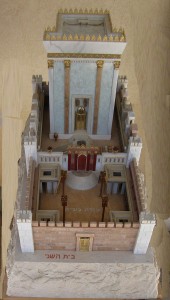
- Model of Second Temple made by Michael Osnis

Read Obadiah 17-21 - God Reassures the Rattled of Restoration• What are the four P’s? (Pe_ p _ _; Pl_ _ _; Pr_ s_ _ _ _; Pu_ _ o _ _)• Where do you see the 4 P’s mentioned in Obadiah 17-21?• Obadiah promised that one day Mount Zion would be made holy. Essentially he is prophesying the holy presence of God would yet be among his people in their own place for the purpose of their mission to be a light to the world.Patrick Fairbairn wrote in his wonderful book The Interpretation of Prophecy that, “the prophets necessarily thought and spake of the future under the conditions of their own historical position; so that it was not the image of the future which threw itself back upon the past, but rather the image of the past which threw itself forward into the future – the things which were, and had been, gave their form to the things which were yet to be.”Read 1 Peter 2:4-10• Have you grasped that the church is the temple of the Holy Spirit?• What has the Church done to earn or deserve such a gift?• How does it matter that God’s people are the temple of the Holy Spirit? What difference does that make in life today?• How would people’s truly grasping that the holy presence of God is within the Church change world politics?